
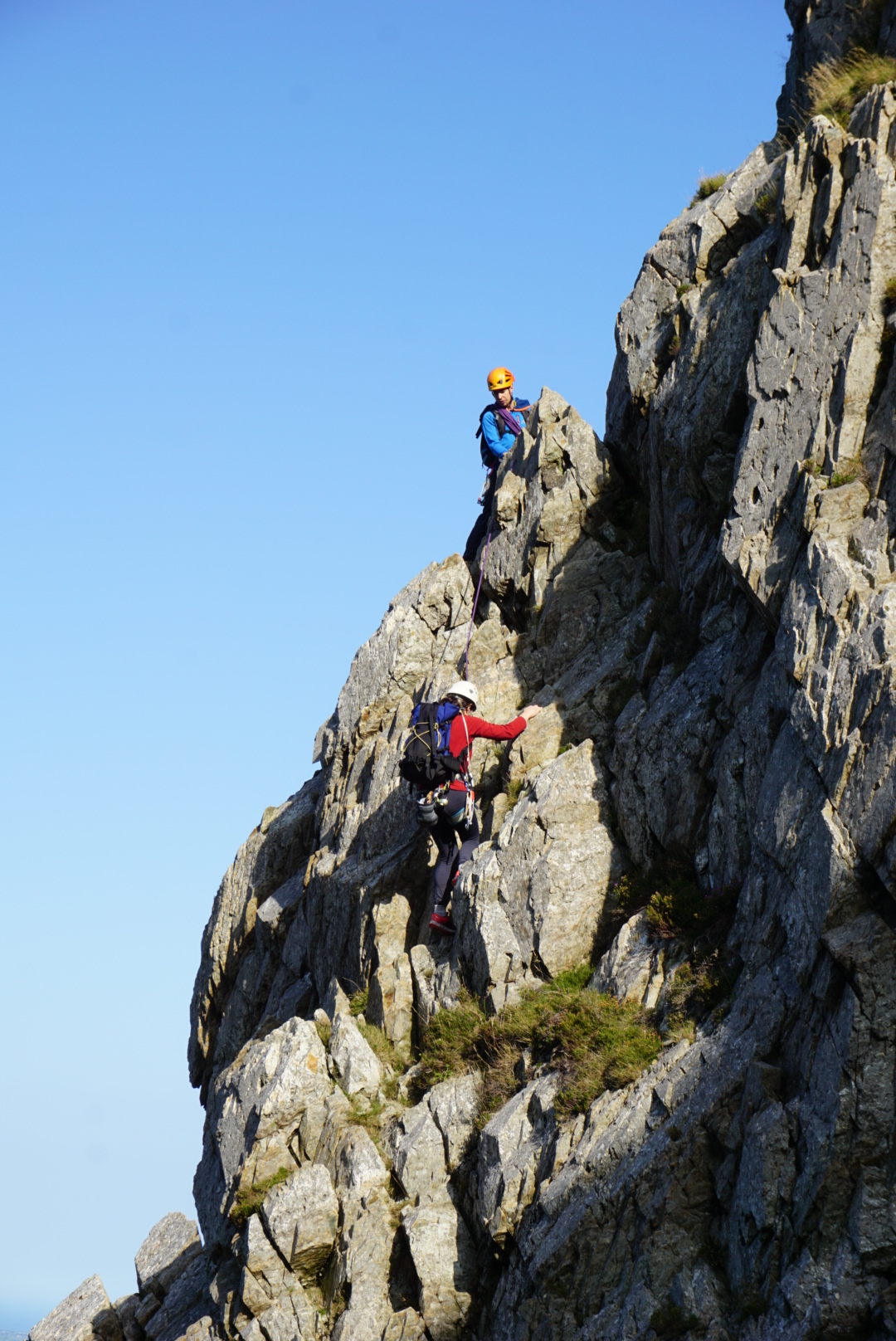
We are lucky to have a lot of fantastic scrambling and mountaineering routes around the UK. We really enjoy spending long days linking up multiple routes, taking in some incredible terrain while moving fast and light in the mountains.
Choosing a scrambling and mountaineering rack is a very personal decision and provides lots of heated debate between instructors and guides. We have found from our experience that having a rack that covers you for as many different protection options as possible is the key to feeling safe while making that difficult move and for building good strong belays to protect your climbing partners.
Below is a list of key gear that I would keep on my rack which I can then add and remove from depending on the days objective.
Nuts
DMM Wallnuts 4 – 11 on a snapgate carabiner
or
DMM offsets 7 – 11 on a snapgate carabiner
Cams or hexes
3 x DMM Dragon cams 2, 3, 4 each on a colour coded snapgate carabiner
or
3 x Hexes green, red and yellow on a snapgate carabiner
Quickdraws
3 x 60cm sling draws
Slings
2 x 120cm slings each on a snapgate carabiner
1 x 240cm sling on a snapgate carabiner
Abseil Tat
5 meters of at least 6mm+ rated cord to leave behind in case of the need to abseil during the route which would be left behind rather than leaving slings or ropes.
Personal kit (per person)
Belay plate on an HMS screwgate carabiner
2 x prussiks on a snapgate carabiner
1 x big HMS carabiner (DMM Boa) and 2 x small screwgate carabiners
Nut key
This kit should cover you for most scrambling routes you will ever encounter, but as with most things around safety equipment, it needs to be used correctly and placed properly otherwise it’s not going to be much use, so good judgement and experience is key!
 fluidcombinations.com